
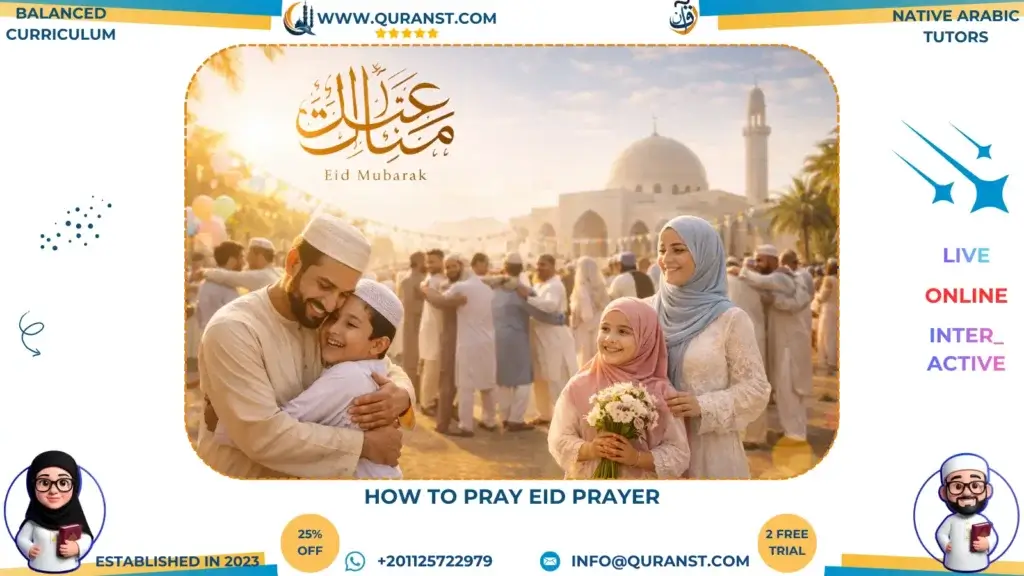
Introduction: The Concept of Eid in the Islamic Worldview
Eid in Islam is not merely a social gathering or a seasonal holiday; it is a profound act of worship (‘Ibadah) and a manifestation of gratitude (Shukr). Unlike festivals in other cultures that may center on historical victories or seasonal changes, the two Islamic Eids are intrinsically linked to the completion of major pillars of faith: Fasting and Hajj.
The Divine Substitution
The legitimacy of the two Eids is rooted in the Prophetic Sunnah. Anas ibn Malik (may Allah be pleased with him) narrated:
“The Messenger of Allah (PBUH) came to Medina and the people had two days in which they used to play and amuse themselves. He said, ‘Allah has given you something better than them: the day of Al-Adha and the day of Al-Fitr.'”.
This Hadith, recorded in Sunan Abi Dawud, establishes that these days are a divine gift, meant to replace pre-Islamic customs with celebrations that elevate the soul while permitting joy.
Table of Contents
- I. Eid al-Fitr: The Festival of Spiritual Harvest
- II. The Fiqh (Jurisprudence) of the Eid Prayer
- III. Eid al-Adha & The Story of Ibrahim (AS)
- IV. The Jurisprudence of the Udhiyah (Sacrifice)
- V. The Link Between Hajj and Eid al-Adha
- VI. The Prophetic Etiquette (Sunnahs) of the Day of Eid
- VII. The Social and Educational Dimensions of Eid
I. Eid al-Fitr: The Festival of Spiritual Harvest
Eid al-Fitr, celebrated on the 1st of Shawwal, represents the “Day of Prizes” for the Muslim Ummah. It marks the conclusion of Ramadan—a month of fasting, prayer, and Quranic immersion.
1. Spiritual Significance and Quranic Context
The essence of this day is the glorification of Allah for His guidance. Allah (SWT) says in the Holy Quran:
“…and [He wants] for you to complete the period and to glorify Allah for that [to] which He has guided you; and perhaps you will be grateful.”. (Surah Al-Baqarah, 2:185).
Scholars of Ahl al-Sunnah wal-Jama’ah, such as Ibn Taymiyyah and Al-Ghazali, have noted that Eid al-Fitr is the celebration of the “victory over the self” (Nafs). It is the day when a believer rejoices in the strength granted by Allah to discipline the body and spirit for an entire month.
2. Zakat al-Fitr: The Purifier of the Fast
A critical component of this Eid is Zakat al-Fitr, a mandatory charity that serves as a social bridge between the wealthy and the needy.
- Its Mandatory Nature: It is Wajib (obligatory) upon every Muslim who possesses food in excess of their needs for the day and night of Eid.
- The Wisdom Behind It: According to the Hadith of Ibn Abbas: “The Messenger of Allah (PBUH) enjoined Zakat al-Fitr as a purification for the fasting person from idle talk and obscenity, and as food for the poor.”.
- The Amount: It is measured as one Sa’ (approximately 2.5kg to 3kg) of staple food, such as dates, barley, or rice.
- Timing: It must be paid before the performance of the Eid prayer.
Join our global community of 500+ families at Quranst Institute
Where we don’t just teach the Quran—we teach the lifestyle of the Prophets.
🚀 Start Your Smart Learning Journey TodayII. The Fiqh (Jurisprudence) of the Eid Prayer
Understanding the legal rulings (Ahkam) is essential for the correct performance of this major ritual.
1. The Legal Ruling of the Prayer
There are three main views among the scholars of the four schools of thought:
- Wajib (Obligatory): This is the view of the Hanafi school and a narration from Imam Ahmad. They argue that the Prophet (PBUH) never missed it and commanded everyone to attend.
- Fard Kifayah (Communal Obligation): The view of the Hanbali school.
- Sunnah Mu’akkadah (Highly Recommended): The view of the Maliki and Shafi’i schools.
Regardless of the legal classification, there is a consensus that attending the Eid prayer is one of the most emphasized communal acts in Islam, so much so that the Prophet (PBUH) encouraged even women who were not praying to attend and witness the goodness and the supplications of the Muslims.
2. Timing and Format
- Timing: The prayer begins when the sun has risen above the horizon by the length of a spear (about 15-20 minutes after sunrise) and ends at the time of Zawal (zenith).
- The Prayer Structure: It consists of two Rak’ahs performed without Adhan (call to prayer) or Iqamah.
- The Extra Takbirat:
- In the first Rak’ah, after the opening Takbir, seven extra Takbirat are recited before the Quranic recitation.
- In the second Rak’ah, five extra Takbirat are recited after standing up and before the recitation.
Eid al-Adha and the Legacy of Sacrifice
While Eid al-Fitr celebrates the completion of a month of fasting, Eid al-Adha (The Festival of Sacrifice) stands as a monumental tribute to the concept of absolute submission to Allah (Al-Istislam). It is observed on the 10th of Dhul-Hijjah and is intrinsically linked to the rites of Hajj.
III. The Theological Roots: The Story of Ibrahim (AS)
The foundation of Eid al-Adha is rooted in the trial of Prophet Ibrahim (AS) and his son Ismail (AS). This narrative is not merely historical but serves as the definitive example of Tawhid (Monotheism) in action.
1. The Command and Submission
Allah tested Ibrahim (AS) by commanding him in a vision to sacrifice his beloved son, Ismail. Despite the gravity of the command, both father and son displayed unwavering faith.
- The Response of Ismail (AS): When informed, Ismail replied with words preserved in the Quran: “O my father, do as you are commanded. You will find me, if Allah wills, of the steadfast.” (Surah As-Saffat, 37:102).
- The Divine Intervention: At the moment of sacrifice, Allah replaced Ismail with a “great sacrifice” (a ram from Paradise).
- The Quranic Declaration: Allah (SWT) says: “And when they had both submitted and he put him down upon his forehead… We called out to him, ‘O Ibrahim, you have fulfilled the vision.'” (Surah As-Saffat, 37:103-105).
IV. The Jurisprudence of the Udhiyah (Sacrifice)
The Udhiyah is the ritual sacrifice of a specific animal (camel, cow, sheep, or goat) during the days of Eid al-Adha to seek closeness to Allah.
1. The Legal Ruling
Scholars of the Sunnah have two main opinions regarding its ruling:
- Sunnah Mu’akkadah (Highly Emphasized Sunnah): The view of the Shafi’i, Maliki, and the majority of the Hanbali schools. They rely on the Hadith where the Prophet (PBUH) said: “If the ten days (of Dhul-Hijjah) begin and one of you wants to offer a sacrifice…” (Muslim). The phrase “wants to” implies a choice, not an absolute obligation.
- Wajib (Obligatory): The view of Imam Abu Hanifa and one narration from Imam Ahmad for those who have the financial means. They cite the Hadith: “Whoever has the means but does not offer a sacrifice, let him not approach our prayer ground.” (Ibn Majah).
2. Conditions of the Animal
For the sacrifice to be valid according to the Ahl al-Sunnah, the animal must meet specific criteria:
- Age: A sheep must be at least six months old; a goat one year; a cow two years; and a camel five years.
- Health: It must be free from obvious defects. The Prophet (PBUH) said: “Four (types of animals) should not be offered as sacrifice: The one-eyed animal whose defect is obvious, the sick animal whose sickness is obvious, the lame animal whose limp is obvious, and the emaciated animal that has no marrow in its bones.” (Tirmidhi).
3. Distribution of the Meat
Following the Sunnah, the meat should be divided into three equal parts to ensure communal benefit:
- The Household: To celebrate and enjoy the blessings of Allah.
- Friends and Relatives: To foster love and strengthen social ties.
- The Poor and Needy: As an act of charity to ensure no one goes hungry on the day of joy.
Deepen Your Knowledge of Islamic Studies
Embark on a comprehensive journey through Fiqh, Aqeedah, Seerah, and Hadith. Join our expert tutors and expand your understanding of Islam.
Book Your Free Class NowV. The Link Between Hajj and Eid al-Adha
Eid al-Adha is the climax of the most blessed ten days of the year.
- Day of Arafah: The day preceding Eid is the Day of Arafah, the pinnacle of Hajj. For those not performing Hajj, fasting on this day expiates the sins of the previous and coming year (Sahih Muslim).
- Unity of the Ummah: While pilgrims are completing their rites in Mecca, the rest of the Ummah joins them in spirit through prayer and sacrifice, manifesting the global unity of Muslims.
Sources and References (For Parts 1 & 2)
- The Holy Quran: Surah Al-Baqarah (2:185), Surah As-Saffat (37:102-107), Surah Al-Hajj (22:37).
- Sahih al-Bukhari & Sahih Muslim: Chapters on the Two Eids and Sacrifice.
- Sunan Abi Dawud: Hadith regarding the replacement of pre-Islamic festivals.
- Al-Mughni by Ibn Qudama: Detailed Fiqh of the four schools regarding Eid prayer and Udhiyah.
- Majmu’ al-Fatawa by Ibn Taymiyyah: On the wisdom of Zakat al-Fitr and the Takbirat.
While the legal rulings (Ahkam) provide the structure of Eid, the Prophetic Sunnahs and social etiquettes provide its soul. This final section explores the refined manners taught by Prophet Muhammad (PBUH) and the profound educational impact of Eid on the Muslim family and the wider community.
VI. The Prophetic Etiquette (Sunnahs) of the Day of Eid
Adhering to the Sunnah on the day of Eid is a way to transform a day of celebration into a continuous act of worship. The scholars of the Four Schools of Thought have categorized these Sunnahs based on the authentic practice of the Messenger of Allah (PBUH).
1. Physical and Spiritual Preparation
- Performing Ghusl (Ritual Bath): It is highly recommended to perform Ghusl before heading to the prayer ground. This practice was confirmed by the Sahabah; Nafi’ reported that “Abdullah bin Umar used to take a bath on the day of Al-Fitr before going to the prayer ground.” (Muwatta Imam Malik).
- Adornment and Fragrance: A Muslim should wear their best clothes to manifest the blessings of Allah. The Prophet (PBUH) had a special cloak (Jubbah) that he wore only on the two Eids and Fridays. For men, applying perfume is also a Sunnah, while women should observe modesty (Haya) and avoid wearing perfume in public spaces.
2. The Etiquette of Food
The Prophet (PBUH) distinguished between the two Eids through his eating habits:
- On Eid al-Fitr: He would not leave for the prayer until he had eaten an odd number of dates (Sahih al-Bukhari). This signifies the immediate end of the fasting period.
- On Eid al-Adha: He would not eat anything until he returned from the prayer, so that the first thing he ate was from his sacrifice (Udhiyah).
3. The Magnification of Allah (Takbirat)
The Takbirat are the hallmark of Eid. They represent the public proclamation of Allah’s greatness.
- Timing: For Eid al-Fitr, it begins from the sighting of the moon until the Imam starts the prayer. For Eid al-Adha, it starts from the dawn of the Day of Arafah (9th Dhul-Hijjah) until the afternoon of the final day of Tashreeq (13th Dhul-Hijjah).
- The Formula: The most common formula among the Sahabah was:“Allahu Akbar, Allahu Akbar, La ilaha illa Allah, Allahu Akbar, Allahu Akbar, wa lillahi-l-hamd.”
4. Changing the Route
Jabir bin Abdullah (RA) reported: “On the day of Eid, the Prophet (PBUH) used to return by a different route from the one he had taken when going to the prayer.” (Sahih al-Bukhari). Scholars suggest this was to spread the greetings of peace (Salam) to more people and so that the earth would bear witness to his worship in different locations.
Eid is the “Gateway” track in Islamic parenting, used to instill love for the faith in the hearts of children and to strengthen the social fabric of the Ummah.
1. Strengthening Kinship (Silat al-Rahim)
Eid is the primary season for reconciliation. The Prophet (PBUH) emphasized that maintaining family ties is linked to divine blessing: “Whoever would like his provision to be increased and his lifespan extended, let him maintain his family ties.” (Bukhari & Muslim). This includes visiting relatives, calling those far away, and initiating peace with those with whom there was a dispute.
2. Permissible Joy and Celebration
Islam does not suppress joy; it refines it. When Abu Bakr (RA) once tried to stop young girls from singing on Eid, the Prophet (PBUH) said: “Leave them, O Abu Bakr, for every nation has a festival, and this is our festival.” (Sahih al-Bukhari).
- Educational Tip: Parents should ensure that Eid is a day of excitement for children through gifts (Eidi), permissible play, and festive meals, creating a positive emotional bond with their Islamic identity.
3. Compassion for the Vulnerable
The joy of Eid is only complete when it is inclusive. The Prophet (PBUH) was the most compassionate toward orphans. A community truly celebrates Eid when it ensures that the poor and the fatherless are given the means to feel the same joy as the wealthy.
Conclusion: A Life of Piety Beyond the Festival
The Eids in Islam serve as spiritual “charging stations.” They remind the believer that while the specific seasons of Ramadan or Hajj may end, the Lord of those seasons is eternal. The true celebration lies in the hope of having one’s deeds accepted.
As the scholars of the past used to say: “Eid is not for the one who wears new clothes; Eid is for the one whose obedience to Allah increases.”
References & Bibliography (Comprehensive)
- The Holy Quran: Surah Al-Baqarah (2:185), Surah As-Saffat (37:102-107), Surah Al-Hajj (22:37).
- Sahih al-Bukhari: The Book of the Two Eids, The Book of Sacrifices.
- Sahih Muslim: The Book of Prayer (Eid) and The Book of Hajj.
- Sunan Abi Dawud: Chapter on the “Establishment of the Two Eids.”
- Muwatta Imam Malik: Rulings on the Sunnah of Ghusl and Takbirat.
- Ibn Qudama, Al-Mughni: A comparative study of the Fiqh of Eid across the four Madhahib.
- Ibn Taymiyyah, Majmu’ al-Fatawa: Regarding the wisdom of Zakat al-Fitr and the philosophy of sacrifice.
- Ibn al-Qayyim, Zad al-Ma’ad: For the detailed Prophetic guidance (Hady) on celebrating the Two Eids.
Eid in Islam: Common Questions
- First Rak’ah: Seven extra Takbirat before the Quranic recitation.
- Second Rak’ah: Five extra Takbirat after standing up and before recitation.
- Performing Ghusl (ritual bath) and wearing your best clothes.
- Eid al-Fitr: Eating an odd number of dates before leaving for prayer.
- Eid al-Adha: Delaying eating until returning from prayer to eat from the sacrifice.
- Reciting Takbirat publicly.
- Returning from the prayer ground using a different route than the one taken there.
